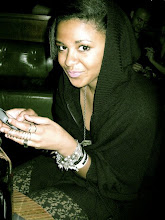
Despite that I've indexed Scott Schuman to the land of boredom (okay, yes, he's still a pioneer of street style blogging), his pervasiveness on the blogosphere and Twittersphere means that I just can't get away from his images, images from a blog that, mind you, I used to check daily. Thankfully, though, I came across this recent photograph of the Sartorialist's, featuring a few fashion bitties from the Fader Magazine's style department, Mobolaji and Abdoul. I promised myself I wouldn't make any "would you be my fucking boyfriend" comments. So, I won't. What's cool is that this is distinct from his usual posts of young French-looking girls and working class-looking old men (or, in this case, really working class).
Thursday, September 30, 2010
fashion bitties
Despite that I've indexed Scott Schuman to the land of boredom (okay, yes, he's still a pioneer of street style blogging), his pervasiveness on the blogosphere and Twittersphere means that I just can't get away from his images, images from a blog that, mind you, I used to check daily. Thankfully, though, I came across this recent photograph of the Sartorialist's, featuring a few fashion bitties from the Fader Magazine's style department, Mobolaji and Abdoul. I promised myself I wouldn't make any "would you be my fucking boyfriend" comments. So, I won't. What's cool is that this is distinct from his usual posts of young French-looking girls and working class-looking old men (or, in this case, really working class).

ordered chaos
David Lynch's first short film, "Six Men Getting Sick," which he described as "57 seconds of growth and fire, and three seconds of vomit."
And this, Lynch's, 'The Alphabet.'
P.S. I'm taking a film class on a filmmaker whose last name is routinely made into an adjective. Guess the director!
Wednesday, September 29, 2010
macaulay
With no real intentions of ever having a baby, I somehow have a list of baby names on my computer, BlackBerry, and various lost notebooks. Macaulay (for a girl or boy) is a new one to the list.
murder, my sweet
My rainy Monday afternoon was spent where it should be (in my case, at least): in class. Thankfully, half of the three hour 'Visual Culture of Crime' lecture was dedicated to screening the 1944 American film noir Murder, My Sweet. I dare not say anything about the plot, but boy, Claire Trevor was the best femme fatale (literally died, too).
God, there was one scene where Trevor wore this number that was like the amalgamation of trends (fads?) today: striped sequins and bold shoulders. Very RiRi. Very glamazon. But obviously, it works best on her -- and it probably always will.
Tuesday, September 28, 2010
i mean, please
Sunday, September 26, 2010
rubber
Photo: Amy Louise Robinson.
Paul Smith rubber brogues, they're totally outside of my comfort zone, which make them even better.
Thursday, September 23, 2010
Wednesday, September 22, 2010
look at that face
Photo: The Imagist.
Model Daphne Groeneveld in a photograph that accentuates her beautiful asymmetry...
Tuesday, September 21, 2010
my first letter to an editor
No longer a hot topic, but still, my response to NOW Magazine's "Racial Networking" piece on Twitter, black people, and Antoine Dodson.
Friday, September 17, 2010
Sunday, September 12, 2010
my friends and i are a gang of fools
My thoughts on Harmony Korine's fuzzy "Act da Fool" short film for Proenza Schouler have been simmering for a few days now. From the moment I saw it, I never once doubted, to say the least, the racial undertones of the piece. But, what made me so conflicted in my critique of the film was its gritty, yet emotional aesthetic. I've seen "Kids," the 1995 feature-length film written by Korine that was both a commendable and highly controversial film on the life of youth in New York City. As a sort of raw urban documentary, it was all about the sex, drugs, HIV and an attack on the overall belief of a lack of adolescent ethics. The first time I watched it, it hit me so hard in a way that I’ll never forget, and I praised it for its "realness" and its gripping attempts at truth-seeking.
In the same way, I wasn't quick to judge "Act da Fool" as downright racist (most things never are, are they?), because I found comfort in the "realness," in the idea that the film does present a different way to approach fashion. Certainly, the fetishization of black bodies in the fashion industry is nothing new. Without a doubt, Korine's film is a portrayal of cultural tourism, a sort of "day in the life of poor black youth" and is in direct conversation with hip hop rhetoric, the criminalization of black bodies and the commercialization of blackness. The beautiful young women in "Act da Fool" suckle 40s like baby bottles, while the voice-over eerily (and proudly) announces that they act like "wild animals." The piece is filled to the brim with ghetto visual clichés like the stray shopping cart, dirty mattresses, crusty wigs and spare tires.
In a way, a comparison to Korine's prior work helped me to understand "Act da Fool." However, what are the stakes of representation here? "Act da Fool" is a four-minute clip with the goal of promoting the brand, ethos and spirit of Proenza Schouler. It’s not a secret that Proenza Schouler is in no way, shape or form, a label that targets a black audience, and certainly not the working class. By reading Korine's latest piece as the commercial image that it is, Proenza positions itself as a brand targeting not a black consumer, but the consumers of black culture.
Once more, what are the stakes of representation of black women, in particular, in the fashion industry? Are the stakes higher due to the lack of black female bodies on the runway and in editorials? "Act da Fool" immediately made me think of bell hooks and her enlightening "Eating the Other" article. "Ethnicity becomes spice, seasoning that can liven up the dull dish that is mainstream white culture," says hooks. The curiosity, fascination and fantasy mussed up with and around black culture is what produces and perpetuates representations like these.
Korine's film for Proenza Schouler brings light to the many images that we have been accustomed to seeing in the media in the past few years or so. For instance, Dutch model's Lara Stone's painted black body entire body in the October 2009 issue of French Vogue, the Hey Hey It's Saturday "Jackson Jive" skit, and Tyra Bank's "biriacial" photography shoots. All this in an age where flirting with skin colour is considered okay, where the trivialization of race boils it down to a state where so many people wholeheartedly believe in the post-racial myth.
What’s tricky about Korine’s piece, as well as other black representations in the fashion industry in particular, is that there is a drought, if you will, of bodies of the “other.” It is by using voyeuristic practices, channeled through film, music and fashion spreads, that the mainstream and dominant society is able to continue its colonial gaze toward blacks, without making any contact that may cause anxiety. Because black stories are rarely told in the industry, narratives like this -- even when presented under an artistic coating -- can perpetuate the negative images and ideas surrounding young black women.
Friday, September 3, 2010

Subscribe to:
Posts (Atom)